toy truck
The toy truck is a small yellow toy that the boy carries through the post-apocalyptic wasteland, a rare object of childhood and comfort that appears at key moments of the journey, surviving loss and plunder, and ultimately serving as a symbol of the boy's enduring innocence and the father's love.
Appearance and Early Journey
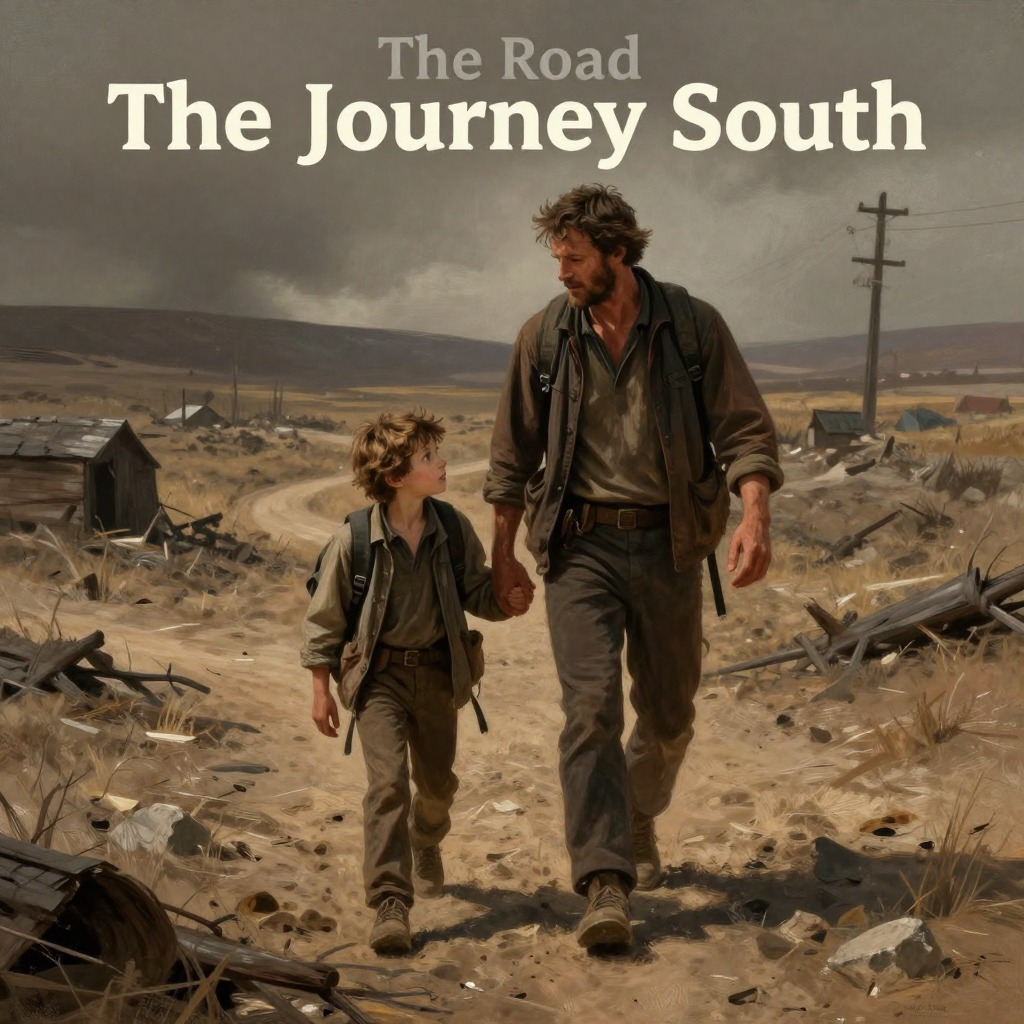
The toy truck first appears during the crossing of the mountains, when the boy finds toys he had forgotten he had. He keeps out a yellow truck and they go on with it sitting on top of the tarp covering the grocery cart. This moment of discovery and retention marks the truck as a deliberate choice, a small anchor of normalcy in a world stripped of all but the essentials. The boy's attachment to the truck is evident as he later takes it from his pack and shapes roads in the ash with a stick, making truck noises as the toy tooled along slowly. This play, occurring during a rare almost-warm day, contrasts sharply with the grim reality of their journey, offering a glimpse of the child's inner world and his ability to find joy in make-believe.
Loss and Recovery
When the truck people plunder their cart, the boy loses the truck along with other possessions. The man, returning to the abandoned cart, finds some books and toys belonging to the boy scattered in the leaves, but the truck is not among them. This loss is part of a larger pattern of deprivation, yet the truck's absence is notable. Later, when the man packs their shoes into the knapsack, he includes the boy's truck, indicating that it has been recovered or that the man has kept it safe. This act of preservation underscores the father's commitment to safeguarding not just the boy's physical needs but also the remnants of his childhood.
Symbol of Innocence and Hope
The toy truck functions as a symbol of the boy's innocence and the fragile hope they carry. In a world where the boy has seen horrors—the charred infant on the spit, the mummied dead, the roadagents—the truck represents a prelapsarian simplicity. The boy's play with the truck, shaping roads in the ash, is a form of world-building, a way to impose order and imagination on a landscape of ruin. The father's decision to keep the truck, even when space and weight are precious, reflects his understanding that the boy's emotional survival is as important as his physical survival. The truck is thus not merely a toy but a talisman of the 'fire' they carry—the moral and spiritual core that distinguishes them from the 'bad guys.'
The Truck in the Context of Loss
The truck's journey mirrors the boy's own: it is lost, found, and carried forward. When the man later inventories the knapsack after the encounter with the roadagent, the truck is not mentioned, but its earlier inclusion suggests it remains with them. The truck's persistence, like the boy's, is a quiet testament to endurance. In the final scenes, after the father's death, the boy goes with the good man and his family, carrying the pistol and the memory of his father. The truck, though not explicitly mentioned, is implied to be among the boy's few possessions, a last link to the world he knew with his father. Its presence in the boy's life, from the mountains to the coast, marks it as a constant in a world of change and loss.
Thematic Significance
The toy truck embodies the novel's central tension between the need to survive and the need to remain human. In a world where every object is weighed for its utility, the truck is useless—it cannot be eaten, used for warmth, or traded. Yet the father allows it, even encourages it, because it nourishes the boy's spirit. The truck is a small act of defiance against the nihilism of the wasteland, a refusal to let the world shrink to mere survival. It is also a marker of the boy's age and innocence, a reminder of what has been lost and what must be preserved. In the end, the truck is not just a toy; it is a symbol of the 'good guys' who carry the fire, who keep trying, who do not give up. The boy's play with the truck, his shaping of roads in the ash, is a microcosm of the novel's own project: to create meaning in a meaningless world, to find beauty in the ashes, and to carry forward the memory of what was good.